












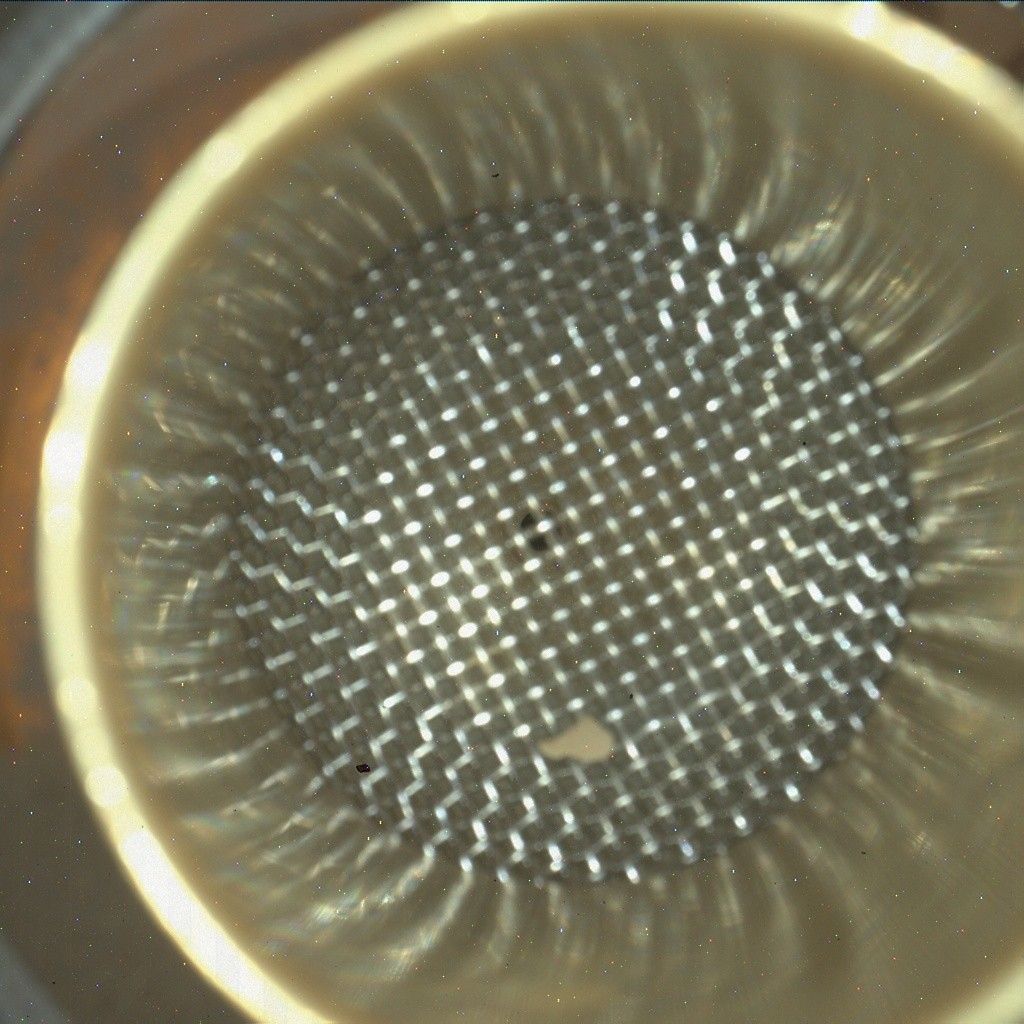
By Susanne P. Schwenzer, Professor of Planetary Mineralogy at The Open University, UKEarth planning date: Friday, May 29, 2026Drilling always keeps the rover in place for a little while, and our 47th successful drill, “Campo Marte,” was no exception. The team used the time wisely and on top of the drilling, we also have many observations. Thinking for a long time about a workspace always gets me attached to the area — some more than others; at the shorter stops, especially — when I am on shift several times during this time. I was Science Operations Working Group chair three times while we were here, so it’s a real “Goodbye” for me today as we are driving onward to reach the next area up the hill on Mount Sharp.The Campo Marte drill was successful, as my colleague Abigail Fraeman reported last week. This week was spent investigating the aftermath of the drilling, which means running the CheMin instrument to get mineralogical data and the SAM instrument to inspect the volatile releases. ChemCam, APXS, MAHLI and Mastcam were also busy documenting the drill hole and the drill fines, as well as how much sample there was available overall.Of course, Curiosity also had a very good look at the other interesting targets in the area! Besides all the work on the drill hole, ChemCam carried out an expert’s targeting exercise by setting two targets up to aim at two different layers on adjacent spots on the finely laminated sediments. That involves aiming at millimeter-sized targets, named “Corcovado” and “Junakas,” respectively, about 3 meters away (about 10 feet)! We are curious if the layers are chemically different, which would tell us about different formation conditions, or if they are similar and the conditions when those layers formed were more similar. ChemCam is also looking at the target “Palcaya” to get more data on the chemistry of the layered bedrock, and will investigate the target “Alcamachi,” which is a float rock that looks intriguingly dark. Maybe that tells us it’s got a different chemistry? We will find out when we get the data!In addition to the chemistry measurements, ChemCam will also carry out a spectral investigation on the target “Magallanas,” which was a little too far away to also point the laser at it, but is intriguingly dark. This last week, ChemCam also planned three long-distance RMIs to document the sedimentary structures — younger…
Lire l'article complet ici : NASA News: Curiosity Blog, Sols 4908-4912: Goodbye Campo Marte, It’s Been Fun!