






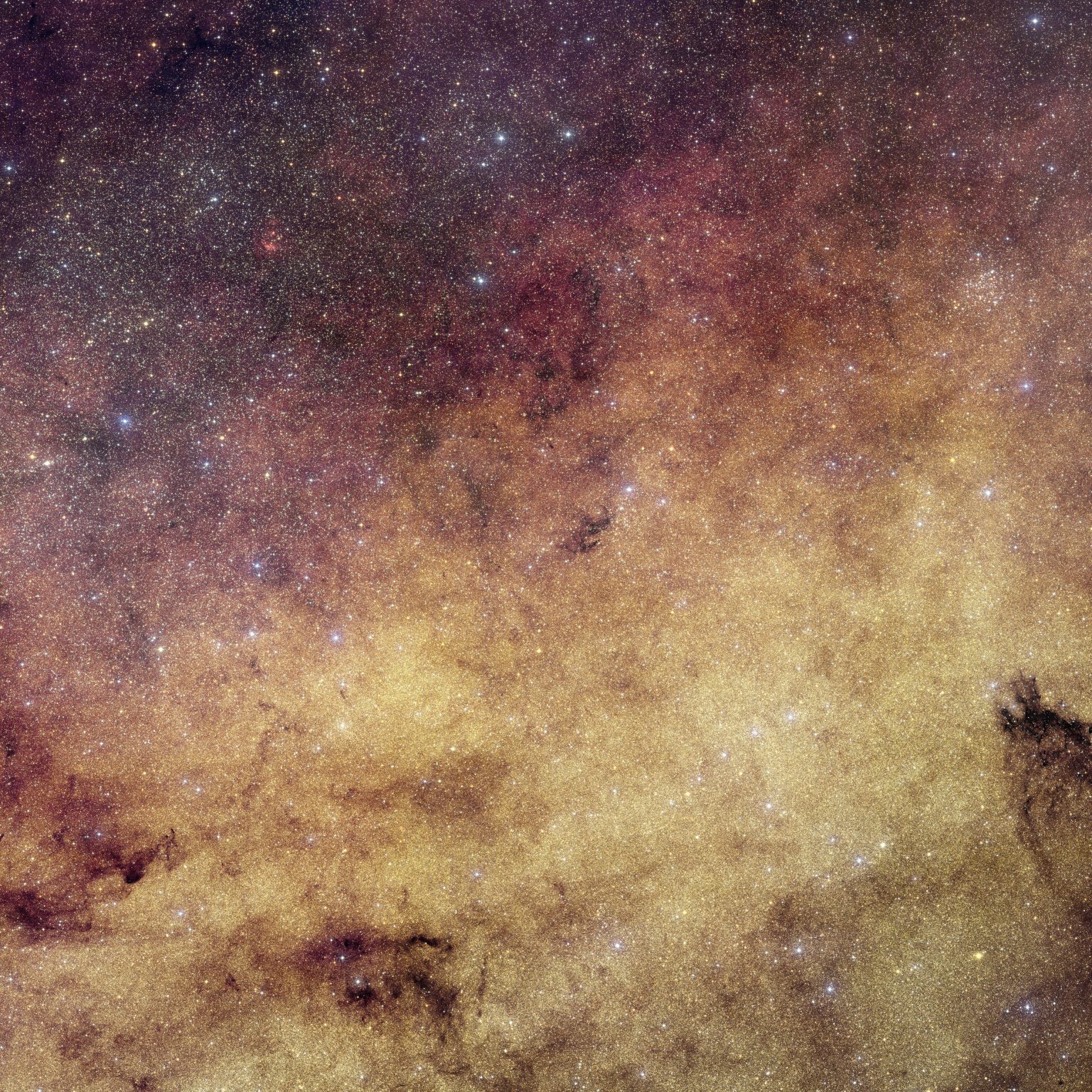
A new look at the heart of our Milky Way galaxy by Euclid, an ESA (European Space Agency) mission with NASA contributions, overlaps with a region scientists will observe with NASA’s Nancy Grace Roman Space Telescope, launching later this summer. This sneak peek gives astronomers a major jumpstart on a core Roman survey, helping scientists learn more than they could from either telescope alone. “This is the only time Euclid has paused its normal sky survey, which is mainly geared toward cosmology,” said Jason Rhodes, a senior research scientist at NASA’s Jet Propulsion Laboratory in Southern California. Rhodes serves as both the U.S. Euclid science lead and the NASA JPL Roman project scientist. “This takes a lot of work and planning, so it really has to be something with a high impact for science. Adding Euclid’s snapshot to Roman’s future survey will help us map our galaxy better and identify hard-to-find cosmic treasures like isolated black holes and rogue planets more easily.”Euclid took one day out from its six-year prime mission to preview the area of sky that will be targeted by Roman’s Galactic Bulge Time-Domain Survey, which will provide one of the deepest views ever into the center of our galaxy. Though Euclid’s one-time observation is shallower and lacks some of the color detail Roman will see, it has similar resolution and covers a larger region — about 5 square degrees, or the sky area covered by about 25 full moons — since Roman’s survey area hadn’t yet been determined when the observation took place in March 2025.Over the course of its five-year primary mission, Roman will repeatedly image a smaller region (1.7 square degrees, or roughly the sky area covered by 8.5 full moons) to watch how hundreds of millions of stars and other objects change over short time periods. Monitoring these changes will reveal hordes of new planets, along with many other cosmic objects and phenomena. Stitching Euclid’s observation onto the front end of Roman’s collection will essentially extend the survey by two years (since Roman’s galactic bulge observations are set to begin in spring 2027), making even more science possible.Mining hidden gemsRoman will watch for tiny surges in starlight that herald a microlensing event. This light-bending phenomenon occurs when a massive object like a star, planet, or black hole — any object with sufficient gravity — closely aligns with a background star from our vantage point. Light…
Lire l'article complet ici : NASA News: Euclid View of Milky Way Heart Previews Core Survey by NASA’s Roman