












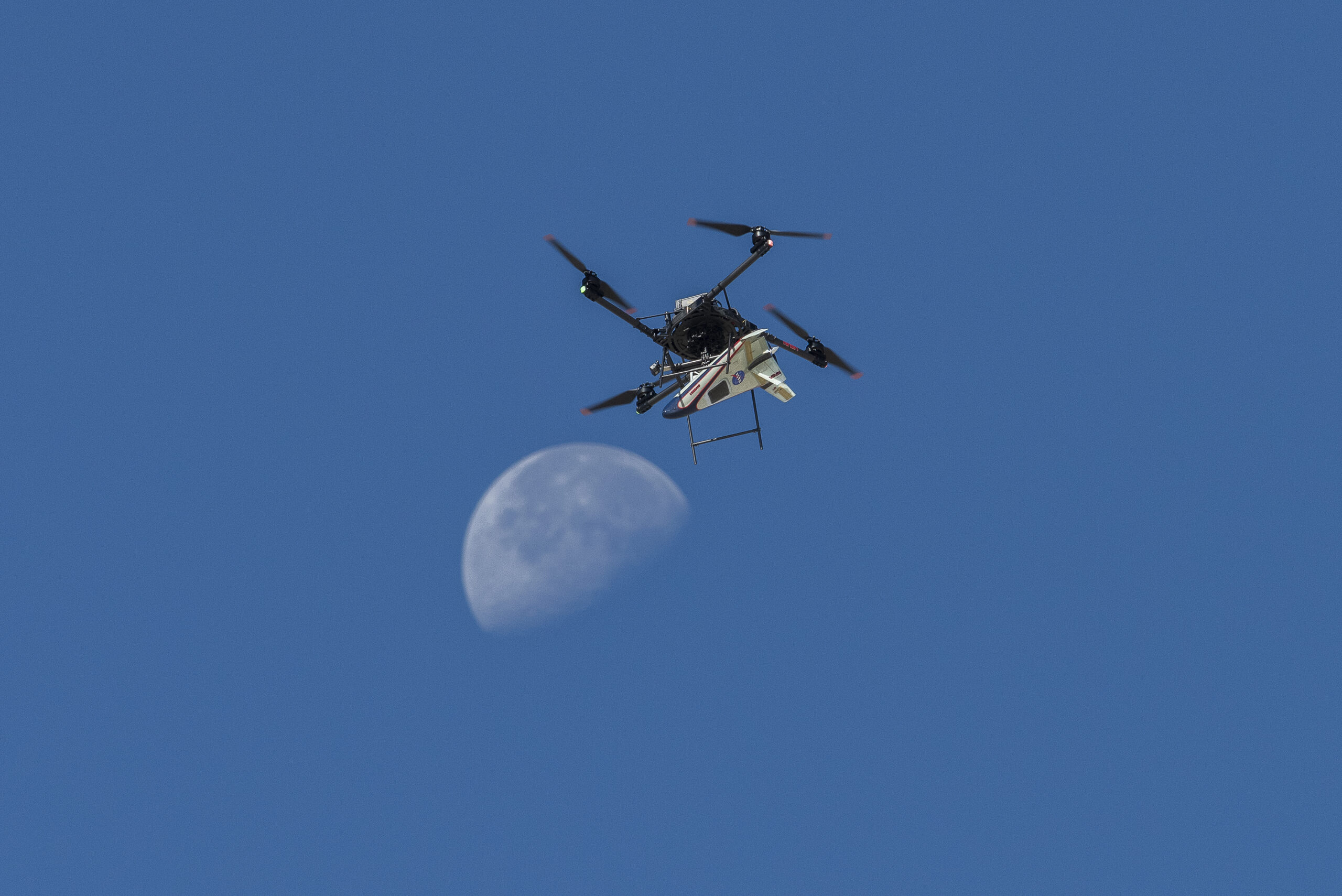
Testing new aerospace concepts in flight remains one of NASA’s most effective ways to advance knowledge and reduce risk.The Dale Reed Subscale Flight Research Laboratory at NASA’s Armstrong Flight Research Center in Edwards, California, supports this mission by using small, remotely piloted and autonomous aircraft as cost‑effective platforms to mature innovative ideas, accelerate learning, and enable smoother transitions to full‑scale flight.When experiments require a flight platform, several NASA remotely piloted aircraft are available: the Alta‑X quadrotor; the Dryden Remotely Operated Integrated Drone (DROID) with its 10‑foot wingspan; and the Multi‑Use Cub, a 14‑foot‑span fixed‑wing aircraft with an expandable payload capacity for flight experiments. For electric vertical takeoff and landing testing, the HQ‑90 quadrotor provides an additional option.Once aircraft and experiments are cleared for operations, laboratory pilots support the mission, including ground operations and flight activities.Each staff member serves as an experienced and certified subscale aircraft pilot and is prepared to fly unique one-of-a-kind or modified commercial aircraft wherever the mission requires.NASA’s FireSense project conducted flights in the Geneva State Forest, located about 100 miles south of Montgomery, Alabama. NASA Armstrong flight research staff integrated the instrument onto an Alta-X drone and tested the system before deployment. Two team members then transported the drone and sensor to the forest, prepared the vehicle for flight, and operated it during the mission. The NASA sensor was flown on the drone to demonstrate how remotely piloted aircraft can gather localized weather data that influences smoke movement and fire behavior. This information may help operational agencies improve wildfire decision-making and better allocate firefighters and resources.Other missions occur closer to NASA Armstrong, such as the Enhancing Parachutes by Instrumenting the Canopy (EPIC) project. EPIC involved air‑launching a capsule containing a parachute and flexible sensor from the Alta‑X. Laboratory staff piloted the flights, supported flight operations, and worked with the EPIC team to design and integrate the parachute‑drop mechanism and safety system into the aircraft.These tests demonstrated that a flexible sensor could help researchers study supersonic parachutes. Continuation of this work can help fill gaps in computer models, making supersonic parachutes safer and more reliable for delivering science instruments and payloads to Mars.
Lire l'article complet ici : NASA News: NASA Uses Subscale Aircraft to Accelerate Flight Innovation