












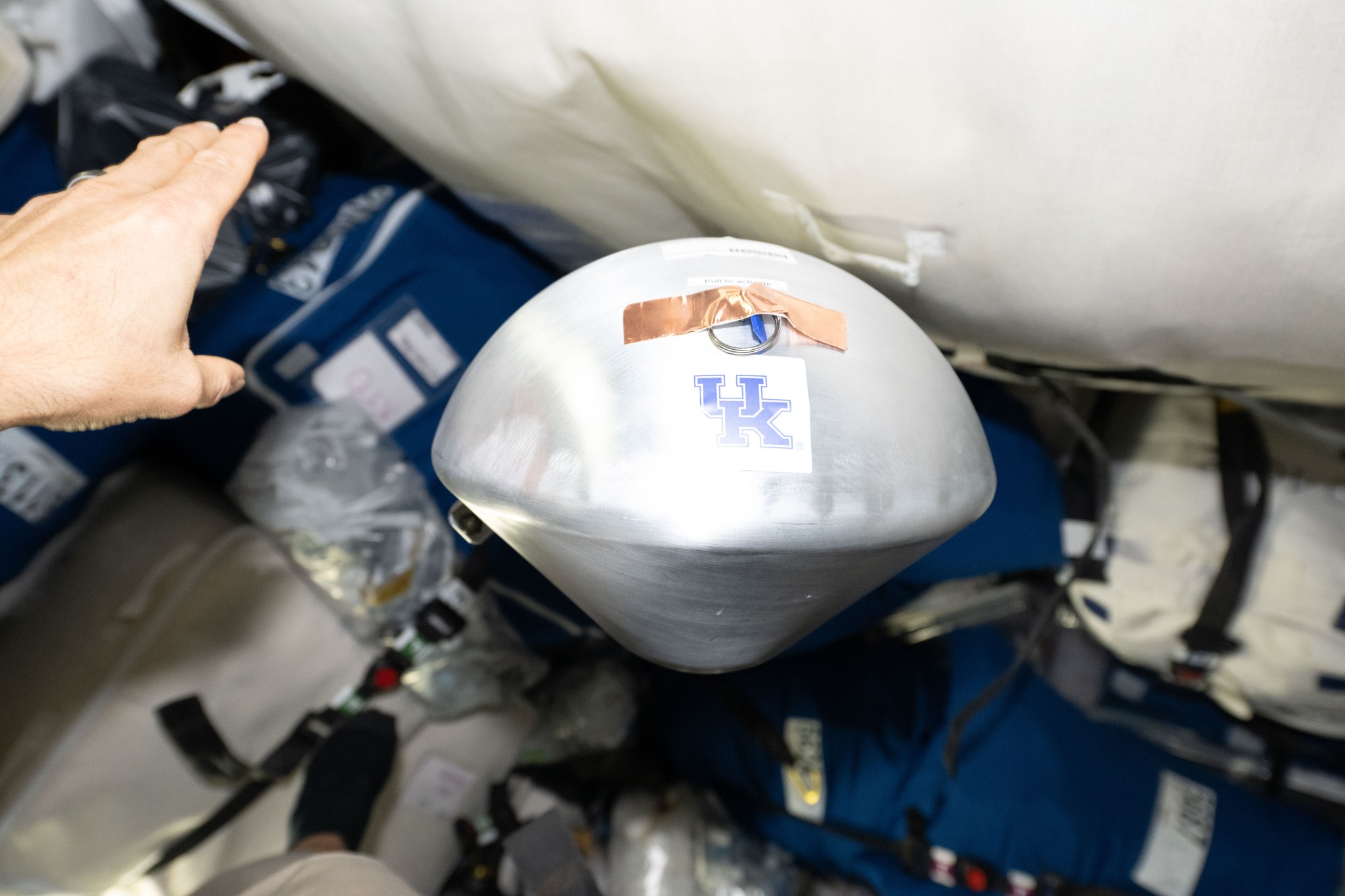
NASA is testing heat shields that can keep astronauts safe as they return from missions to the Moon and Mars in an unusual way: by taking out the trash.When Northrop Grumman 24th cargo resupply mission for NASA undocked from the International Space Station, it carried a fleet of 12 small, experimental capsules designed to test the next generation of thermal protection materials that could serve as the foundation for future heat shields.The experiment, called the Kentucky Reentry Probe Experiment (KREPE-3), is the third in a series of low-cost, high-impact missions that use the final moments of the cargo spacecraft’s lifespan to gather valuable data.The experiment is a collaboration among the University of Kentucky, the state of Kentucky, NASA’s Established Program to Stimulate Competitive Research (EPSCoR), several NASA centers, and other federal and commercial partners.“KREPE-3 is a great example of the goals of NASA’s EPSCoR program,” said David Berger, EPSCoR program manager at NASA’s Headquarters in Washington. “We are supporting the next generation of scientists and engineers as they develop unique projects that benefit their education and NASA’s mission goals.”Trash to treasureBefore the mission’s Cygnus XL spacecraft departed the station, astronauts packed it with waste and activated the 12 small capsules carried inside. Designed by University of Kentucky students, the capsules include sensors that will measure temperature, pressure, motion, magnetic field, and light during re-entry. As the vehicle harmlessly breaks apart in Earth’s atmosphere on its planned route, the capsules will eject and begin collecting data on how each set of experimental heat shield materials performs. Satellite signals will transfer live data to researchers, offering insights into how larger heat shields could protect future cargo or crew.
Lire l'article complet ici : NASA News: NASA Demonstrates Next-Generation Heat Shield Technologies