












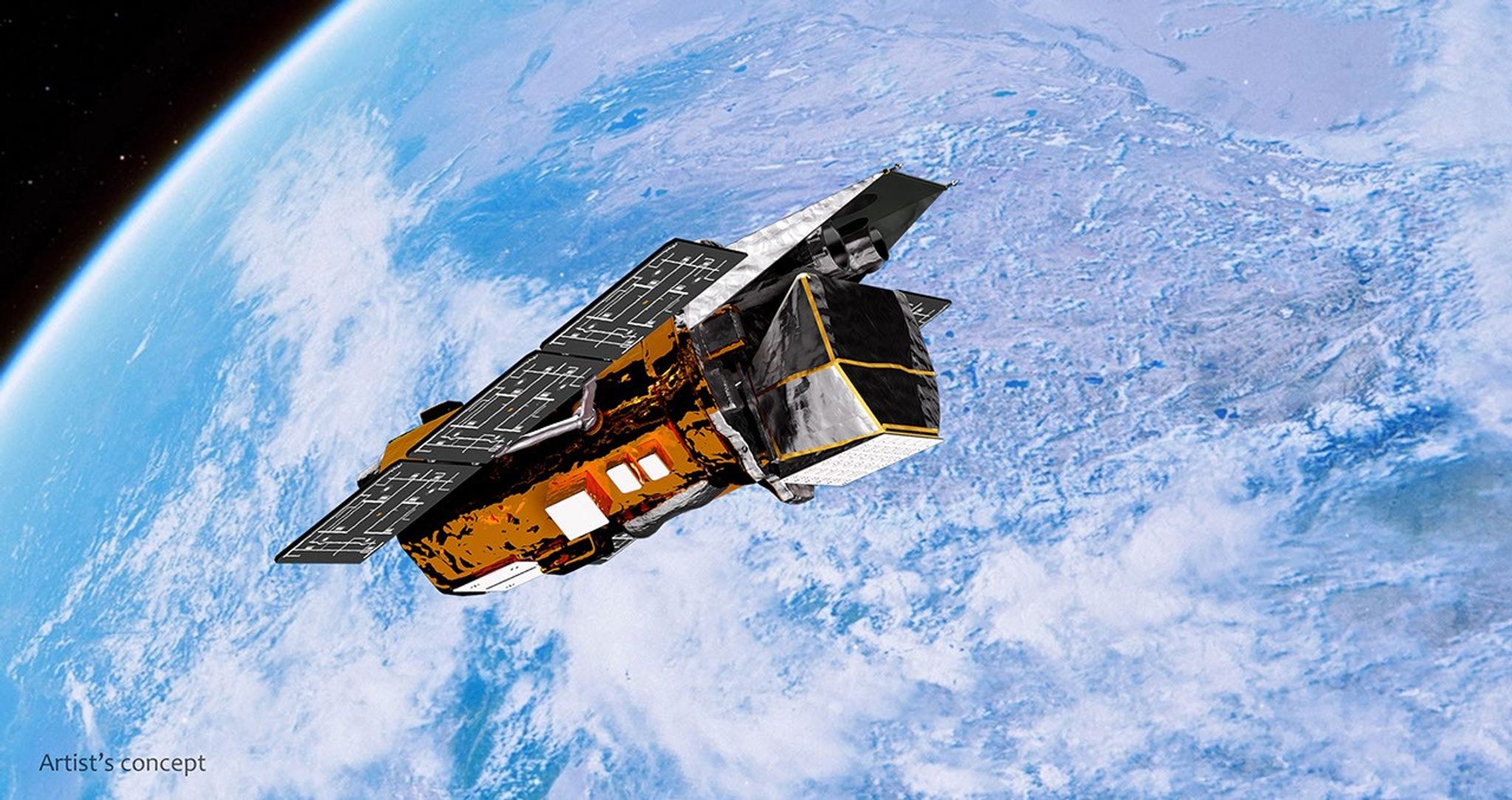
NASA’s Neil Gehrels Swift Observatory has ended its science mission now that the spacecraft is orbiting less than 171 miles (275 kilometers) above Earth’s surface. The greater atmospheric drag at this height prevents the satellite’s telescopes from steadily gazing at their astronomical targets. Swift conducted its final observation on Oct. 20. It is expected to re-enter the atmosphere in the next few weeks.“Swift delivered an incredible, lasting return on investment for the nation, designed for a two-year primary mission but productive for more than 10 times as long,” said Shawn Domagal-Goldman, director, Astrophysics Division at NASA Headquarters in Washington. “In that time, Swift played a major role in advancing our understanding of the changing universe and was part of a revolution in astrophysics that showed how critical rapid-response observations are to the entire community. To support rapid response to cosmic events in a post-Swift world, we’re exploring our ability to use and augment NASA’s fleet of existing space telescopes, from fast-to-orbit commercial capabilities to efficient, innovative new missions. And Swift leaves us with an extraordinary archive of multiwavelength observations that will fuel new discoveries for decades more.”In its storied career, Swift has observed more than 2,000 gamma-ray bursts, the most powerful explosions in the cosmos. It has studied more than 1,400 supernova explosions, witnessed stars shredded by black holes, monitored active galaxies, conducted an all-sky X-ray survey, studied asteroids and comets, and more. Swift data has contributed to about 7,000 published scientific papers.“Swift was designed as a satellite dedicated to studying gamma-ray bursts, outbursts that came and went so quickly that no one could target them with large telescopes to learn more,” said S. Bradley Cenko, the mission’s principal investigator at NASA’s Goddard Space Flight Center in Greenbelt, Maryland. “Swift needed to detect and locate gamma-ray bursts, communicate their position to other observatories, and then swing its telescopes around to image the burst locations before their afterglows faded out. This typically took Swift about a minute to do.”Led by its first principal investigator, Neil Gehrels, Swift was born as a multiwavelength observatory, with co-aligned Optical/Ultraviolet and X-ray telescopes that could quickly image and refine a burst’s position. The mission launched into orbit on Nov. 20, 2004, and went to work the following month. In 2018, NASA renamed the mission to honor Gehrels following his death.Speed was especially important for an elusive population called short gamma-ray bursts, which reach peak brightness in less than…
Lire l'article complet ici : NASA News: NASA’s Swift Mission Ends, Leaves Behind Scientific Bonanza