



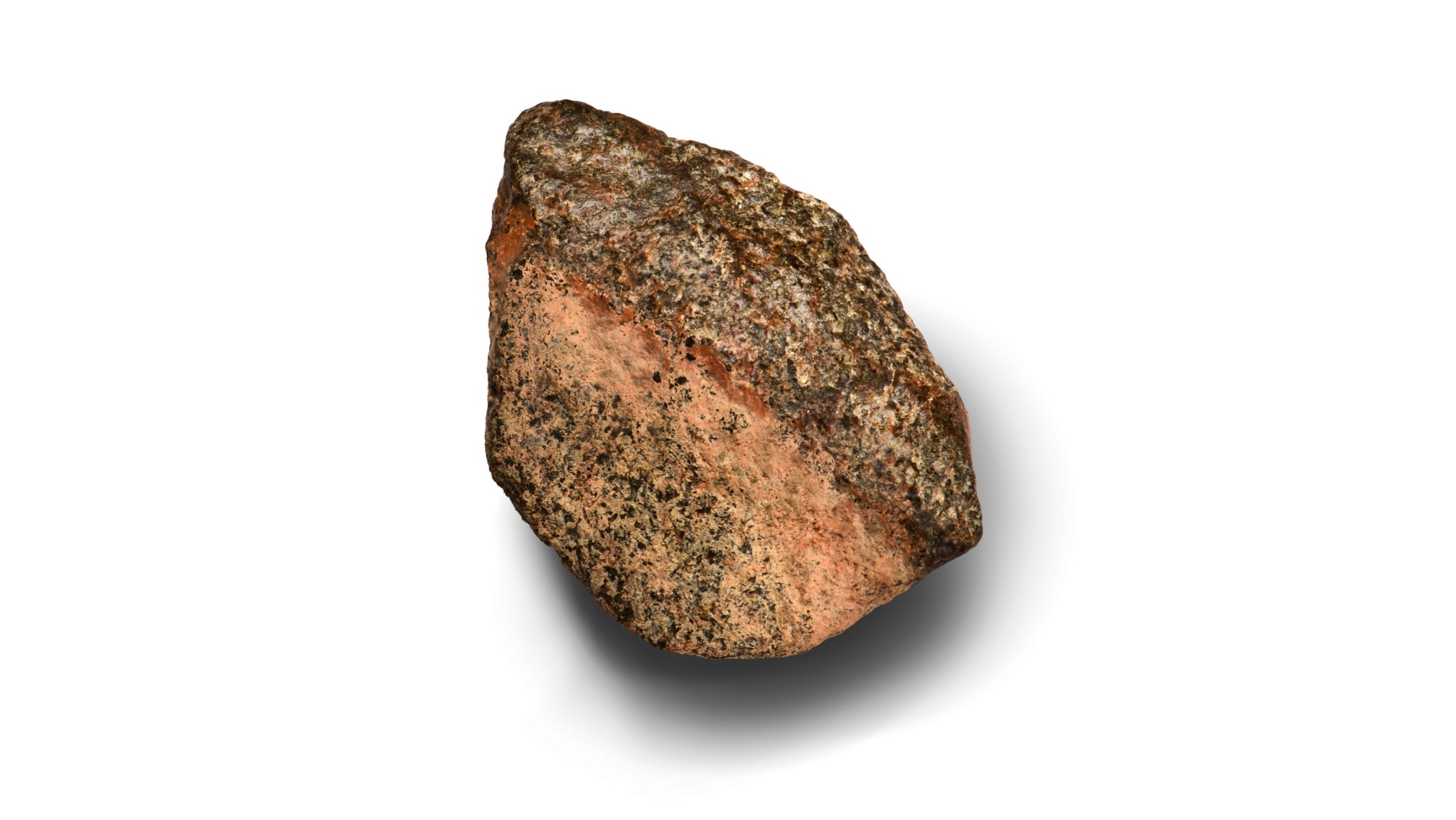
When a rose-colored meteorite was found in the Sahara Desert in 2022, no one knew how old it was or where it came from. Not until NASA-funded scientists age-dated its minerals did they realize the nearly 2-pound (800-gram) rock was a piece of Mars that formed more than 4.1 billion years ago, making it one of the oldest Martian meteorites ever found. Named Teghaza 001 after the salt plain in Mali where it was discovered, the meteorite is one of roughly 435 from the Red Planet.In a paper published Thursday in Science, researchers offered an initial characterization of Teghaza 001, providing a rare snapshot of Mars’ ancient crust and formation. What scientists learn from future studies could help answer many questions, including how water and rocks interacted on ancient Mars. A separate paper published in Science Advances in June detailed the meteorite’s water content, offering a look at how water shaped the early planet’s surface.“It was only after we started looking closely that we realized this meteorite is really unique,” said the paper’s lead author, Yang Liu of NASA’s Jet Propulsion Laboratory in Southern California. “One of the paper’s reviewers called it a Rosetta Stone for Mars.”What sets Teghaza 001 apart from other Martian meteorites is its texture and age as well as the uniqueness of its igneous, or volcanic, minerals. It is one of the three most ancient Martian meteorites found on Earth. While invaluable, the others provide more limited glimpses of Mars’ geological history. They include ALH84001, which is composed almost entirely of one mineral and is similar in age to Teghaza 001. The other meteorite, nicknamed “Black Beauty,” formed about 2.1 billion years ago and is composed of small, volcanic rock fragments.Unlike its ancient peers, Teghaza 001 has a mix of igneous minerals that tells a story about how the planet’s crust formed from cooling magma before it was eventually altered by subsurface water. The meteorite’s distinctive mineralogy matches what NASA’s Mars Reconnaissance Orbiter has observed in the planet’s cratered southern highlands. No one will ever know exactly where the meteorite originated on Mars, but the paper identifies several potential locations that match Teghaza 001’s mineralogy and chemistry.“This is really our first piece of Martian crust from a part of Mars we’ve never had a sample of before,” said the new paper’s second author, Lee Saper, who conducted the research while at JPL as a postdoctoral scholar.…
Lire l'article complet ici : NASA News: NASA-funded Study Details One of Oldest Mars Meteorites Ever Found